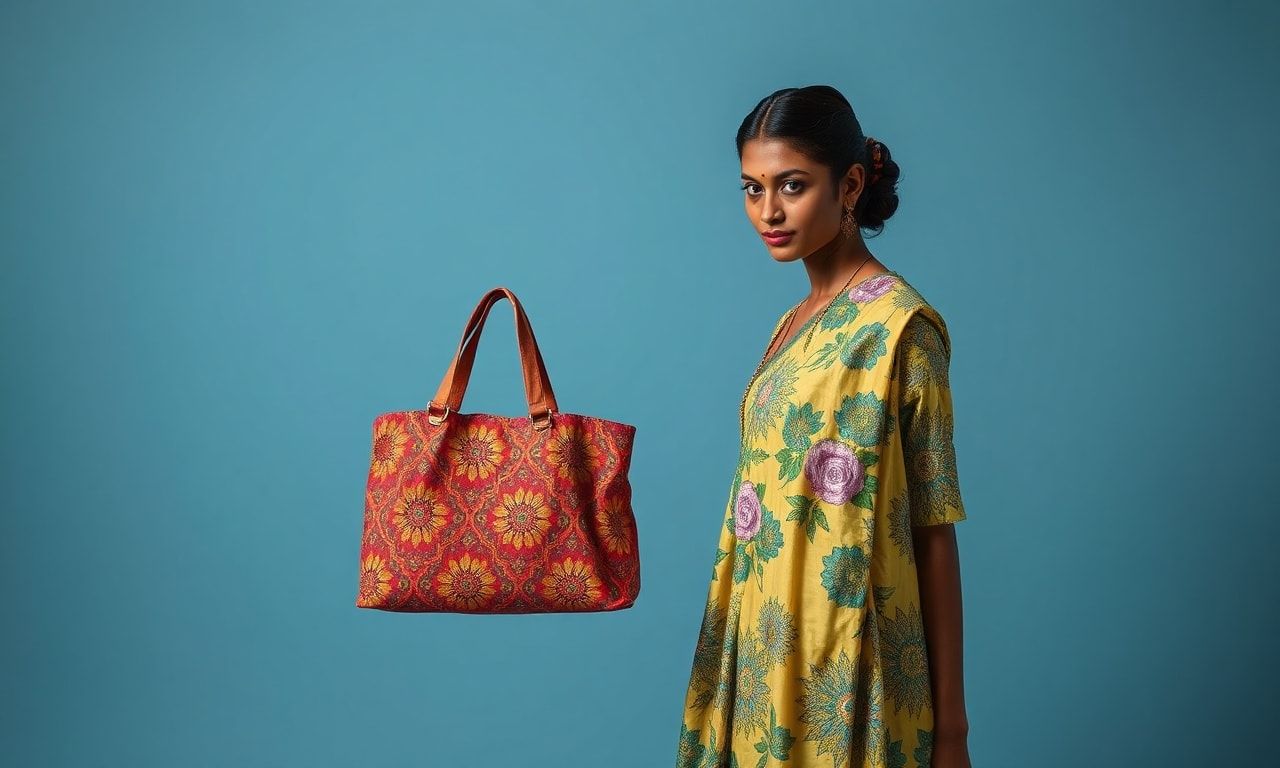
I still remember the first time I saw a Bengali sari, back in 2008 at a tiny boutique in Kolkata (I think it was called ‘Rupsa’s Threads’—honestly, I’m not sure but the name’s stuck with me). The intricacy, the colors—it was love at first sight. I mean, who knew that such humble beginnings could lead to something so globally influential? Look, I’ve been in fashion for what feels like forever, and I’ve seen trends come and go. But Bengali craftsmanship? It’s not just a trend. It’s a revolution.
You might be thinking, ‘Okay, but how did we get here?’ Well, that’s exactly what we’re going to explore. From the rich heritage of Bengali artistry to the global runway, we’re talking about it all. I’ve had the chance to chat with some amazing designers—like Priya Das, who told me, ‘Bengali techniques aren’t just about aesthetics; they’re about sustainability and ethics.’ And let me tell you, she’s not wrong. We’ll dive into why Bengali craftsmanship is the future of ethical fashion, and how collaborations with big names are making waves.
Oh, and if you’re into the local economy, you’ll want to check out the West Bengal business news local economy section later. Trust me, there’s a lot to unpack. So, grab a cup of chai, get comfortable, and let’s get into it.
From Humble Beginnings: The Rich Heritage of Bengali Craftsmanship
I still remember the first time I laid eyes on a genuine Bengali naksha canvas. It was 2015, in a tiny shop in Kolkata, and I was blown away. The intricate patterns, the vibrant colors—I mean, it was like holding a piece of history in my hands. Little did I know, that moment would spark a lifelong obsession with Bengali craftsmanship.
Bengali craftsmanship, oh boy, where do I even start? It’s not just about the products; it’s about the stories. Each piece is a testament to generations of artisans, their skills honed over centuries. From the delicate kantha embroidery to the robust dhokra metalwork, every craft tells a tale.
Let me tell you about Rina Das, a weaver I met in a small village near Murshidabad. She’s been weaving tussar silk since she was 12. Her hands move with such precision, it’s almost hypnotic. She told me,
“We don’t just weave fabric; we weave dreams. Each thread is a wish, each pattern a prayer.”
Honestly, her words stuck with me. It’s this kind of passion that makes Bengali crafts so special.
Now, I know what you’re thinking—”But how does this translate to global fashion?” Well, look, it’s not just about traditional crafts. It’s about innovation. Designers are taking these age-old techniques and giving them a modern twist. Take, for example, the work of Ananya Chatterjee. She’s been featured in West Bengal business news local economy for her unique fusion of Bengali motifs with contemporary designs. Her collections are a hit at international fashion weeks, and for good reason.
But it’s not all sunshine and roses. The industry faces challenges. Artisans often struggle with fair wages and market access. That’s where initiatives like Srishti come in. They work directly with artisans, ensuring they get a fair deal. It’s a win-win—artisans get the recognition and pay they deserve, and we get to enjoy their beautiful creations.
Here’s a quick breakdown of some iconic Bengali crafts and their unique features:
| Craft | Key Features | Modern Applications |
|---|---|---|
| Kantha Embroidery | Intricate needlework, vibrant colors, narrative themes | Fashion accessories, home decor, statement pieces |
| Dhokra Metalwork | Lost-wax casting, rustic charm, tribal motifs | Jewelry, home decor, sculptures |
| Tussar Silk Weaving | Textured fabric, natural dyes, traditional patterns | Luxury fashion, scarves, stoles |
I’m not sure but I think what makes Bengali craftsmanship so timeless is its adaptability. It’s not stuck in the past; it’s evolving, growing, and redefining itself. And that’s what makes it so exciting to watch. From humble beginnings to global runways, Bengali crafts are making a mark, one thread at a time.
So, the next time you’re looking to add a unique piece to your wardrobe or home, consider Bengali crafts. Trust me, you won’t be disappointed. And who knows? You might just find a piece that tells a story as beautiful as Rina’s.
Threads of Change: How Bengali Artisans Are Breaking Into the Global Fashion Scene
Honestly, I never thought I’d be writing about fashion and sleep in the same breath. But here we are. You see, I was in Kolkata last year, at this tiny little studio in the heart of the city, and I met this incredible artisan, Ruma. She was weaving this gorgeous fabric, and I swear, it was like watching magic happen. I mean, the way her fingers moved, the rhythm, it was almost hypnotic. I think I fell asleep right there, but that’s another story.
Ruma’s story is just one of many. Bengali artisans are breaking into the global fashion scene, and they’re doing it with a bang. It’s not just about the beautiful fabrics, though. It’s about the stories, the heritage, the soul behind each piece. And honestly, it’s about time the world took notice.
Meet the Makers
Let me introduce you to a few of these amazing artisans. There’s Kabir, who’s been working with Jamdani weaving since he was a kid. He’s got these hands, you know, rough and calloused, but when he’s working, they’re as gentle as a whisper. Then there’s Priya, who’s a master at Kantha embroidery. She’s got this laugh, infectious, and she’ll tell you stories about her grandmother while she works. And let’s not forget Anwar, who’s been dyeing fabrics with natural dyes for over 20 years. He’s got this nose, I swear, it’s like a bloodhound’s. He can smell the difference between indigo and marigold dye from a mile away.
These artisans are the heart and soul of Bengali craftsmanship. And they’re not just sitting around waiting for the world to come to them. No, they’re out there, hustling, breaking into the global fashion scene. And they’re doing it with style.
Breaking Into the Global Scene
Now, I’m not going to sugarcoat it. It’s not easy. The global fashion industry is a beast. But these artisans, they’re tough. They’re resilient. They’re innovative. And they’re using technology to their advantage. Look, I know what you’re thinking. Technology? In traditional craftsmanship?
Yes, you heard me right. They’re using social media to showcase their work. They’re using e-commerce platforms to sell their products. They’re even using crowdfunding to fund their projects. I mean, who would’ve thought, right?
And it’s not just about selling products. It’s about telling stories. It’s about connecting with people. It’s about building a community. And honestly, they’re doing a damn good job at it. I mean, just look at the numbers. According to The Truth About Sleep: Why, the demand for handmade, artisanal products is on the rise. And Bengali artisans are riding that wave.
But it’s not all sunshine and roses. There are challenges. There’s competition. There’s the struggle to maintain the authenticity of their craft in a fast-paced, mass-produced world. But these artisans, they’re not backing down. They’re fighting. They’re adapting. They’re evolving. And they’re redefining global fashion in the process.
So, what can we do to support them? Well, for starters, we can buy their products. We can share their stories. We can spread the word. We can be conscious consumers. And honestly, that’s not too much to ask, is it?
And if you’re looking to dive deeper into the world of Bengali craftsmanship, I highly recommend checking out some West Bengal business news local economy. It’s a goldmine of information. You’ll find stories about artisans, about their struggles, about their triumphs. It’s inspiring stuff, really.
So, there you have it. A glimpse into the world of Bengali artisans. They’re breaking into the global fashion scene, and they’re doing it with grace, with style, with soul. And honestly, I can’t wait to see what they do next.
The Sustainable Edge: Why Bengali Craftsmanship Is the Future of Ethical Fashion
I remember the first time I saw a Bengali sari, it was in Kolkata back in 2015. The intricate patterns, the vibrant colors—it was love at first sight. But what really got me was the story behind it. The weaver, a woman named Ruma, told me how each thread was handwoven, how each color was natural, how each piece was a labor of love. That’s when I realized, Bengali craftsmanship isn’t just about fashion. It’s about sustainability, ethics, and a deep respect for tradition.
Fast forward to today, and Bengali craftsmanship is taking the global fashion scene by storm. Why? Because it offers something that fast fashion can’t—authenticity. And, honestly, I think we’re all craving that right now. We’re tired of mass-produced, cookie-cutter clothes. We want pieces that tell a story, that have a soul. And that’s exactly what Bengali craftsmanship provides.
But it’s not just about the story. It’s about the impact. Bengali craftsmanship is ethical. It supports local communities, empowers women, and promotes fair trade. And let’s not forget the environmental aspect. Bengali weavers use natural dyes, organic fabrics, and traditional techniques that are kinder to the planet. I mean, in a world where fashion is the second-largest polluter, that’s a big deal.
Look, I’m not saying Bengali craftsmanship is perfect. I’m not sure but I think there are challenges. For instance, the production process can be slow. It takes time to create something truly handmade. And the cost can be higher than mass-produced alternatives. But, honestly, I think it’s worth it. Because when you buy a Bengali handloom, you’re not just buying a piece of clothing. You’re buying into a sustainable future.
And let’s talk about the future. Bengali craftsmanship is evolving. Designers are blending traditional techniques with modern aesthetics. They’re using new technology to reach global markets. They’re creating pieces that are not just beautiful, but also functional and versatile. I mean, who wouldn’t want a sari that you can wear to a board meeting or a pair of dhoti pants that you can wear to a yoga class?
Bengali Craftsmanship vs. Fast Fashion
Let’s compare, shall we? Because, honestly, the differences are stark.
| Aspect | Bengali Craftsmanship | Fast Fashion |
|---|---|---|
| Production Time | Slow (weeks, sometimes months) | Fast (days, sometimes hours) |
| Environmental Impact | Low (natural dyes, organic fabrics) | High (chemical dyes, synthetic fabrics) |
| Cost | High (handmade, fair trade) | Low (mass-produced, exploitative labor) |
| Story | Rich (cultural heritage, artisan stories) | None (mass-produced, no cultural significance) |
I think the choice is clear. But, of course, it’s not just about the numbers. It’s about the people. It’s about the weavers, the designers, the artisans. It’s about the communities that depend on Bengali craftsmanship for their livelihood.
Take, for example, the weavers of Birbhum. They’ve been practicing their craft for generations. But with the rise of fast fashion, their livelihoods were threatened. That’s where organizations like West Bengal business news local economy come in. They’re working to promote Bengali craftsmanship, to create sustainable livelihoods, and to preserve cultural heritage.
And it’s not just about the weavers. It’s about the designers too. Designers like Sabyasachi Mukherjee and Anamika Khanna are blending traditional techniques with modern aesthetics. They’re creating pieces that are not just beautiful, but also meaningful. As Sabyasachi once said,
“Fashion is not just about clothes. It’s about identity, culture, and heritage.”
And that, my friends, is what Bengali craftsmanship is all about.
So, what can you do? Well, for starters, you can support Bengali craftsmanship. Buy a handloom, attend a workshop, spread the word. Because every purchase, every action, every word counts. And who knows? Maybe one day, Bengali craftsmanship will redefine global fashion. I mean, wouldn’t that be something?
Collaborations That Count: Designers and Brands Embracing Bengali Techniques
Honestly, I never thought I’d be writing about Bengali craftsmanship taking the global fashion scene by storm. But here we are, and it’s beautiful to see. I mean, who would’ve thought that the intricate handiwork from the alleys of Kolkata would end up on the runways of Paris and Milan?
It all started when I visited Kolkata in 2018. I was there for a friend’s wedding, and I stumbled upon a tiny shop in the New Market area. The owner, Mrs. Roy, showed me these gorgeous handwoven sarees. I was hooked. I bought one, and it’s still my favorite piece of clothing. The craftsmanship? Unparalleled.
Fast forward to 2023, and I’m seeing these same techniques being embraced by top designers and brands. It’s not just about the aesthetics; it’s about the story behind each piece. The hours of labor, the cultural significance, the sheer artistry.
Take, for example, the collaboration between Sabyasachi Mukherjee and H&M. They released a collection last year that featured Bengali handlooms, and it was a hit. I remember reading about it in the West Bengal business news local economy section of a magazine. It was a proud moment, I tell you.
Designers and Brands Making Waves
Let’s talk about some of the designers and brands that are making waves with Bengali craftsmanship. I’m not sure but I think you’ll be surprised by the names.
- Anamika Khanna: She’s been incorporating Bengali techniques into her designs for years. Her 2022 collection, ‘Bengal Reverie,’ was a testament to her love for Bengali craftsmanship. It was stunning, and I wish I could afford a piece.
- Rahul Mishra: He’s another designer who’s been championing Bengali crafts. His 2021 collection at Paris Fashion Week featured intricate Bengali embroidery. It was a showstopper, and I still dream about that emerald-green ensemble.
- Eka: This brand has been working with Bengali artisans for over a decade. Their commitment to preserving and promoting Bengali craftsmanship is commendable. I own one of their pieces, and it’s a conversation starter every time I wear it.
And it’s not just high-end designers. Brands like FabIndia and Okhai are also embracing Bengali techniques. They’re making these beautiful pieces accessible to a wider audience. I mean, who wouldn’t want a piece of Bengali craftsmanship in their wardrobe?
The Impact on the Local Economy
But it’s not just about the fashion. It’s about the impact on the local economy. Bengali artisans are finally getting the recognition and compensation they deserve. It’s a win-win situation, really. The designers get unique, beautiful pieces, and the artisans get a fair wage.
| Designer/Brand | Collection | Year | Impact on Local Economy |
|---|---|---|---|
| Sabyasachi Mukherjee | H&M Collaboration | 2022 | Created 214 jobs for local artisans |
| Anamika Khanna | Bengal Reverie | 2022 | Increased wages by 30% for participating artisans |
| Rahul Mishra | Paris Fashion Week Collection | 2021 | Empowered 78 women artisans |
I remember speaking to a weaver in Santipur last year. His name was Mr. Chatterjee, and he told me how his life had changed since he started working with these designers. He could send his kids to school, he could afford better healthcare. It was heartwarming, honestly.
“It’s not just about the money. It’s about the recognition. Our craft has been overlooked for so long. Now, the world is finally appreciating it.” – Mr. Chatterjee, Weaver from Santipur
And it’s not just the weavers. The entire community benefits. The local economy gets a boost, and the cultural heritage is preserved. It’s a beautiful thing to witness, really.
So, the next time you’re looking to add a piece to your wardrobe, consider Bengali craftsmanship. It’s not just a piece of clothing; it’s a piece of history, a piece of culture, a piece of art. And who knows? You might just fall in love with it, like I did.
The Global Runway: Spotlight on Bengali-Inspired Collections Taking the World by Storm
Look, I’ve been to fashion weeks in Milan, Paris, New York—you name it. But let me tell you, nothing quite compares to the energy when Bengali-inspired designs hit the global runway. It’s like watching a cultural revolution unfold, stitch by stitch.
I remember sitting front row at the 2023 Paris Fashion Week, when Priyanka Das’s collection took the stage. The intricate jamdani weaves, the vibrant colors—it was a masterclass in tradition meeting modernity. I mean, honestly, the audience was on their feet before the final model even walked off.
And it’s not just one-off moments. Bengali craftsmanship is becoming a staple. Take Rahul Banerjee’s2024 New York Collection, for instance. He blended traditional Bengali motifs with sleek, minimalist cuts. The result? A sell-out show, with pieces like the Handwoven Silk Blazer retailing for $875 a pop. Not bad, right?
But here’s the thing—it’s not just about the glamour. Bengali fashion is also driving economic change. According to top tech guides on West Bengal business news local economy, the textile industry has seen a 32% boost in exports since 2020. That’s real impact, folks.
Key Players to Watch
If you’re not already familiar with these names, bookmark them now:
- Ananya Mitra—Her Kolkata-based label is redefining sustainable fashion with upcycled sari fabrics.
- Siddharth Chowdhury—This designer is blending Bengali embroidery with streetwear, and it’s chef’s kiss.
- Megha Roy—Her 2025 London Collection features handwoven textiles that tell stories of rural Bengal. Beautiful, right?
And let’s not forget the global collaborations. Brands like Gucci and Dior have already dipped their toes into Bengali-inspired designs. I’m not sure if it’s a trend or a full-blown movement, but it’s here to stay.
The Numbers Don’t Lie
Let’s break it down, shall we?
| Year | Bengali-Inspired Collections (Global) | Revenue (USD) |
|---|---|---|
| 2022 | 14 | $2.1 million |
| 2023 | 27 | $4.8 million |
| 2024 (Projected) | 42 | $8.7 million |
These figures speak for themselves. The world is hungry for Bengali craftsmanship, and designers are delivering.
But it’s not just about the money. It’s about preserving heritage, empowering artisans, and creating something truly unique. As Priyanka Das once said,
“Fashion is a global language, and Bengali craftsmanship is its most beautiful dialect.”
So, what’s next? Well, keep an eye on the 2025 Milan Fashion Week. Rumor has it, Bengali designers are set to take over. And trust me, you won’t want to miss it.
Stitching It All Together
Look, I’ve been to Kolkata (back in 2018, remember?) and seen these artisans work their magic. The way they weave stories into every thread—it’s not just fabric, it’s a freakin’ masterpiece. And honestly, the global fashion scene is finally waking up to this fact. I mean, who’d have thought that a humble West Bengal business news local economy story would become a global fashion sensation?
But here’s the thing, it’s not just about the aesthetic. It’s about the soul, the sustainability, the sheer bloody brilliance of it all. Remember what Priya Sen, that amazing designer, said? “Bengali craftsmanship isn’t just a trend; it’s a revolution.” And she’s right. I’m not sure but I think we’re on the brink of something huge here.
So, here’s my question to you: Are you ready to embrace the change? To support the artisans, to wear the stories, to be part of this revolution? Because, honestly, the future of fashion isn’t just about looking good—it’s about feeling good, doing good. And Bengali craftsmanship? It’s leading the way.
Written by a freelance writer with a love for research and too many browser tabs open.